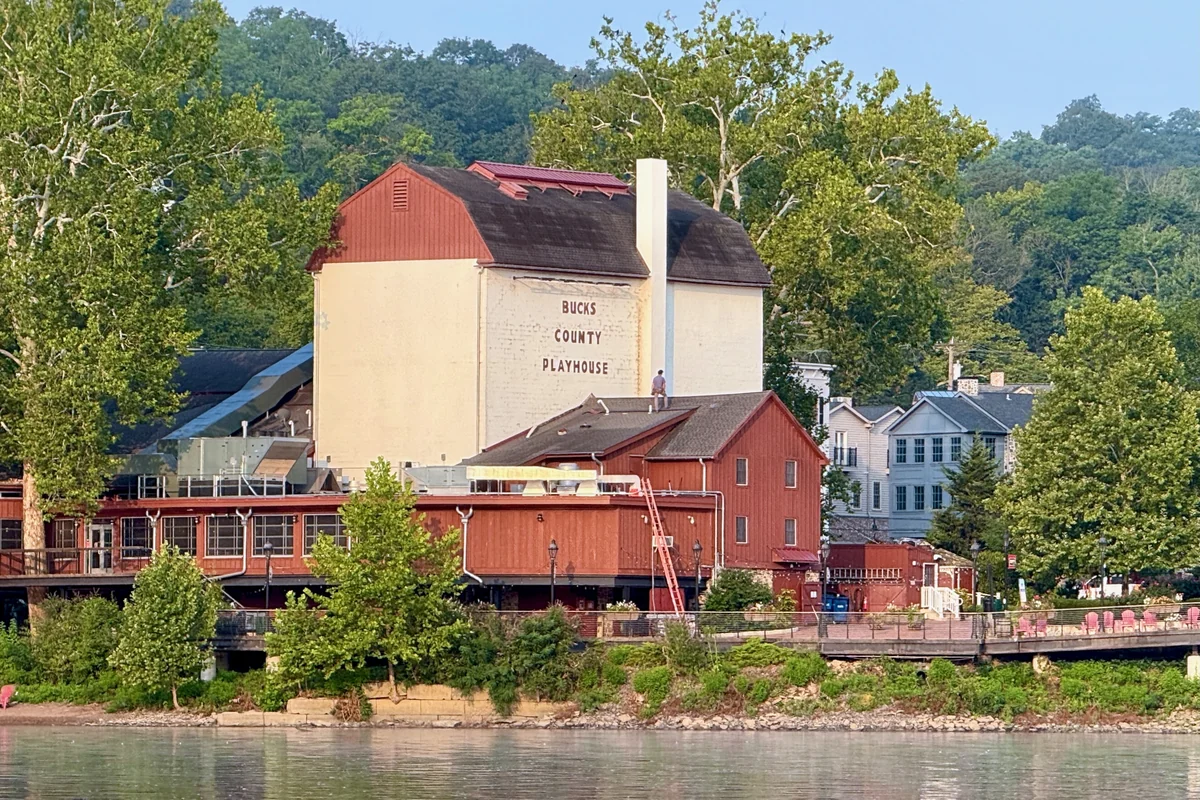
Photo: Zeete · Bucks County Playhouse, New Hope, PA - river side, 2025 (opens in a new tab) · CC BY-SA 4.0 (opens in a new tab) · Resized to 1200 by 800 pixels and converted to WebP. No crop or content changes. Shown without additional cropping. This version is available under the same CC BY-SA 4.0 license.
Along the Delaware
The Delaware Valley is Lenape homeland, with a history reaching back thousands of years. Long before European settlement, Lenape people lived, fished and traded along the river. Colonization brought dispossession and forced migration. Lenape nations and communities continue today; the Delaware Tribe of Indians’ own resources offer an important perspective for further reading.
Mills and a new name
Water-powered mills and a river crossing helped shape the town. The name New Hope came from New Hope Mill, rebuilt after a fire. Nearby, the Parry Mansion, completed around 1784, preserves a connection to mill owner Benjamin Parry and generations of his family. The New Hope Historical Society tells the fuller story and offers house tours.
The working canal
Completed in 1832, the Delaware Canal carried coal and other cargo between Easton and Bristol, connecting with a larger transportation network. Commercial navigation ended in 1931. Today, a walk along the Delaware Canal Towpath offers a quieter encounter with that industrial past. At Lock 11, look for the Locktender’s House and check the Friends of the Delaware Canal for visiting information.
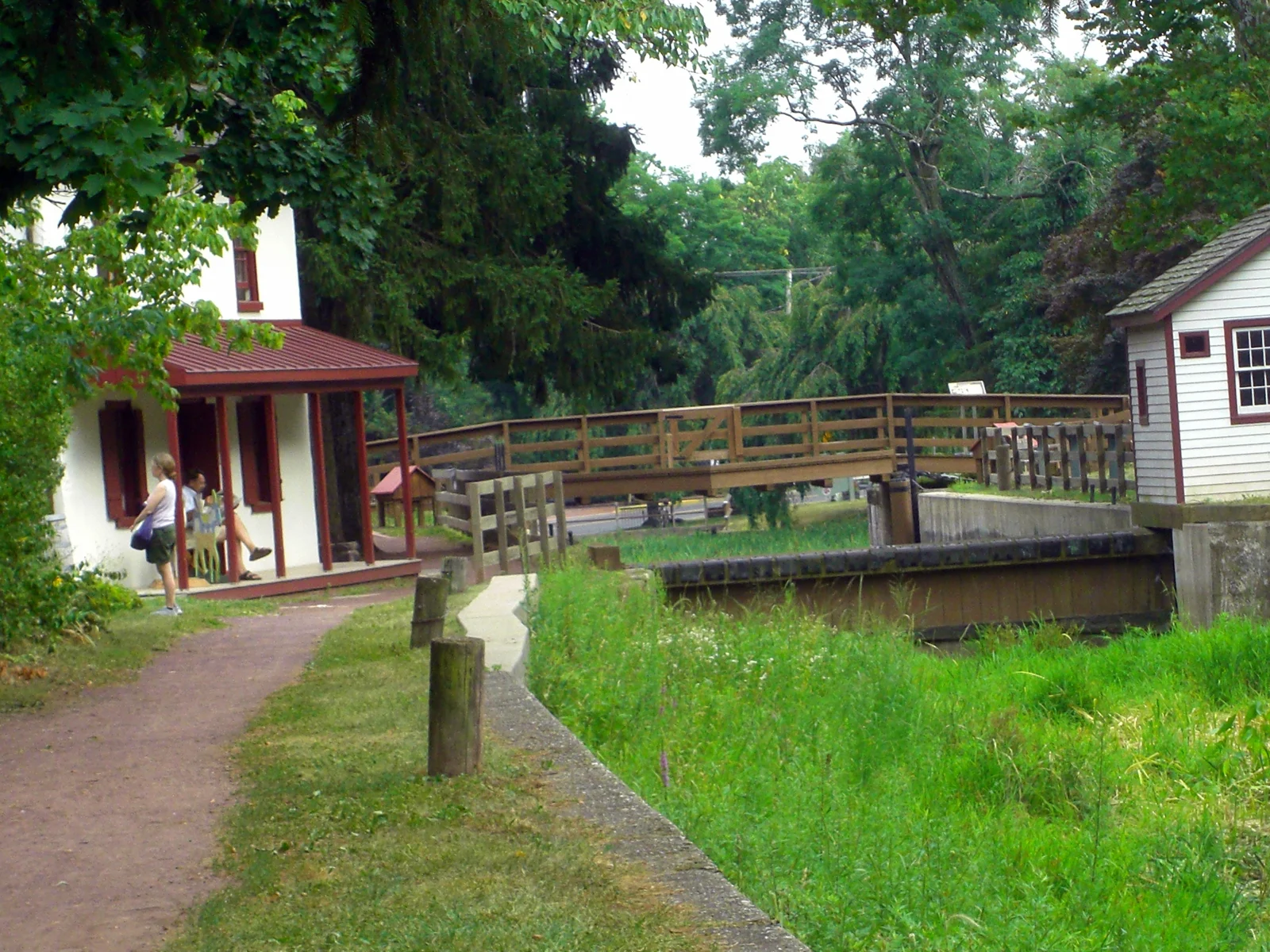
Photo: Jared Kofsky/PlaceNJ.com · Locktender’s House and Lock 11, Delaware Canal, New Hope, PA (opens in a new tab) · CC BY-SA 3.0 (opens in a new tab) · Resized to at most 1600 pixels and converted to WebP. No generative edits. This version is available under the same CC BY-SA 3.0 license.
Artists find a home
Around the turn of the twentieth century, painters including William Lathrop and Edward Redfield helped establish New Hope as an important art center. The landscape inspired artists associated with Pennsylvania Impressionism. See that history through the Michener Art Museum’s collection in Doylestown, then explore what artists are making now with our local art guide.
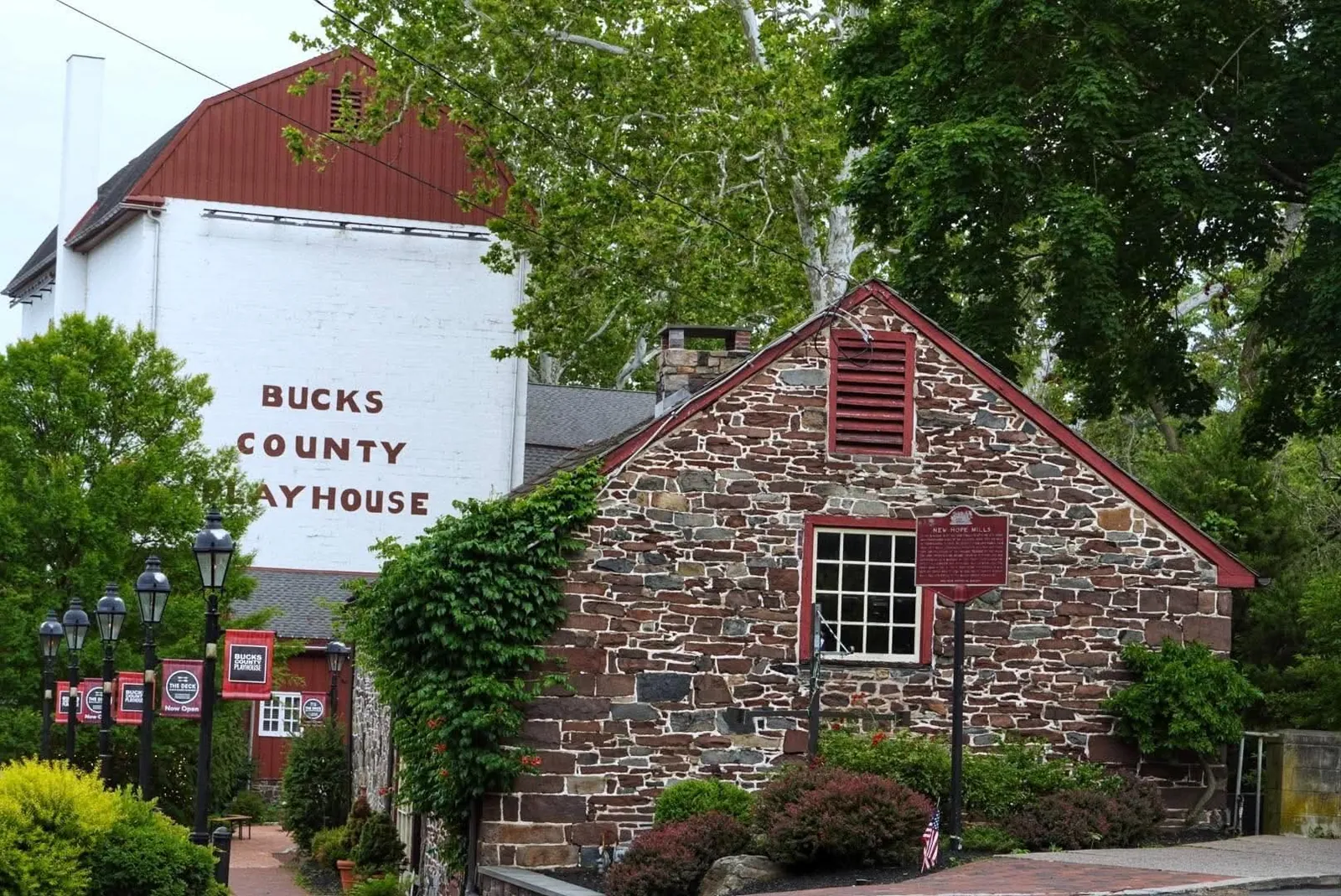
Photo: Jay Garrison
From mill to stage
Bucks County Playhouse opened on July 1, 1939, in a former grist mill beside the Delaware. Its history brings the town’s industrial and theatrical lives together in one building. Read the Playhouse’s own story, take a look from the river promenade, or plan a visit around a performance.
Why we’re here
New Hope’s history is one reason this guide exists. We want to help people discover the creativity, independent businesses and gathering places that make a visit meaningful, and find ways to take part in what comes next.
This is an independent guide, not an official town history. For a deeper visit, start with the local organizations caring for these places today.